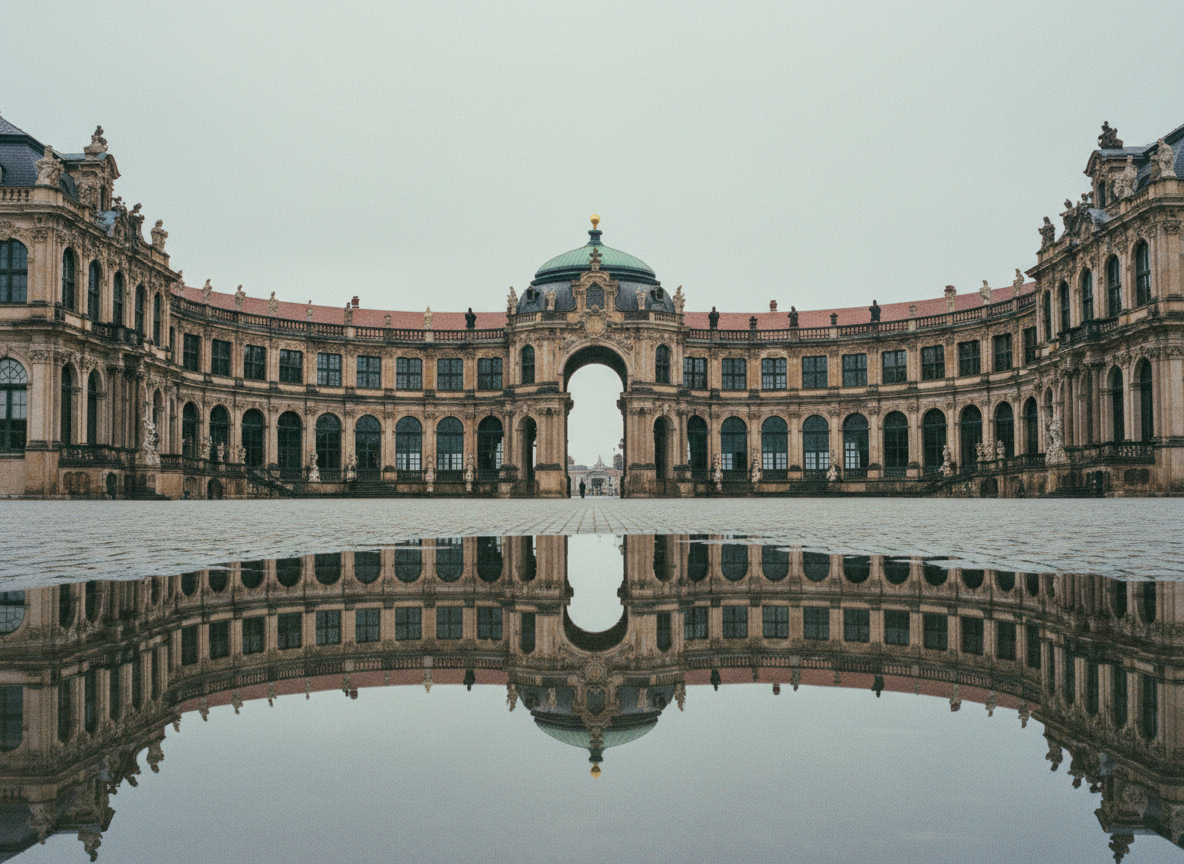
Firebombed to rubble in 1945, meticulously rebuilt — Dresden's resurrection is Germany's most moving story.
Dresden was once called 'Florence on the Elbe' — and then, in February 1945, Allied firebombing reduced it to ash. The city's resurrection is one of modern history's great acts of cultural perseverance.
The Frauenkirche, rebuilt stone by stone using original fragments identified by their blackened surfaces, reopened in 2005. Standing inside, you can see where darkened original stones are interspersed with new sandstone — a deliberate mosaic of destruction and renewal.
The Zwinger Palace, Semperoper opera house, and the Old Masters Gallery make Dresden's cultural density rival any European capital. But walk across the Augustusbrücke to Neustadt and you'll find a completely different city — bohemian, alternative, and covered in street art.
Quick Facts
51.0504°N, 13.7373°E
~48K
on foot
Cross to Neustadt for the real Dresden — Kunsthofpassage has the 'musical rain drain' building that plays music when it rains.